
All industries

Industries

Lakes & Ponds

Restore oxygen and fight algae in standing water.

Pond and lake aeration with nanobubbles differs from a surface aerator in where the oxygen ends up. A fountain or paddle works at the surface, which is the one part of a standing water body that was never short of oxygen. Nanobubbles are under 200 nm and effectively neutrally buoyant, so oxygen introduced at depth stays at depth for days rather than rising out — which is where the anoxia, the sediment and the nutrient release actually are.

Lakes & Ponds

Standing water suffers from low oxygen at depth, algae blooms and nutrient-rich sediment. A fountain or paddle works at the surface — the one layer that was never short of oxygen. Nanobubbles are under 200 nm and effectively neutrally buoyant, so oxygen introduced at depth stays at depth for days.

That matters because sediment holds phosphorus while the water above it has oxygen, and releases it when that water goes anoxic. Treating the deep layer works on the loop driving the bloom rather than on the bloom itself — and nothing is dosed to do it.

Why algae bloom

An algal bloom is a symptom, and treating it as the problem is why so much money gets spent on ponds without much changing.

The underlying condition is usually nutrient availability, and the largest reservoir of nutrient in a mature pond is frequently the sediment rather than whatever runs in from the catchment. That sediment holds phosphorus in a form that stays locked up while the water above it has oxygen — and releases it when that water goes anoxic. Which is exactly what happens when a lake stratifies in summer: the surface warms, mixing stops, the bottom layer runs out of oxygen, and the sediment starts feeding the bloom at the surface.

That is a self-reinforcing loop. The bloom dies, sinks, decomposes, consumes more oxygen at depth, and releases more nutrient. Cutting the bloom back at the surface does nothing to the loop; restoring oxygen at the bottom addresses the mechanism driving it. This is why the depth at which oxygen is delivered matters more than the total quantity.

Oxygen in deep water

Stratification is the reason standing water behaves so differently from a flowing stream, and it is seasonal rather than permanent.

LayerWhat happens in summerConsequence
SurfaceWarms, exchanges gas with the air, algae take up residenceAdequate oxygen, and the layer every surface aerator is working on
MiddleA temperature gradient forms and mixing effectively stopsThe barrier that keeps surface oxygen from reaching the bottom
BottomDecomposition consumes oxygen with no route to replace itAnoxia, phosphorus release from sediment, and the source of the bloom

The failure mode of surface aeration is not that it does nothing — it is that it works on the layer that already had oxygen.

Nanobubbles versus surface aerators

Both put oxygen into water. They differ in where the oxygen goes and how long it stays.

Surface aerator or fountain

Agitates the top layer and looks like it is working, which is part of its appeal. Gas exchange happens at the surface; below the thermocline very little changes.

Coarse-bubble diffuser

Placed at depth, which is the right idea — but the bubbles rise within seconds and deliver most of their gas to the air above. It also mixes the layers, which is sometimes wanted and sometimes not.

Nanobubbles

Introduced at depth and stay there: effectively neutrally buoyant, days of persistence, and NanoMAR publishes 40 %+ higher oxygen transfer than conventional bubble aeration.

Energy per kg O₂

A pond aerator runs continuously through a season, so its operating cost is decided by one number that almost nobody asks for: energy per kilogram of oxygen actually dissolved.

Motor rating tells you nothing useful here. A machine that draws less power while venting most of its gas to the atmosphere buys more oxygen and delivers less of it. The comparison that means something is kilowatt-hours per kilogram transferred, measured at the depth and temperature you actually have — and it is the comparison a fountain does worst on, because its gas exchange is limited by the surface area it can agitate.

NanoMAR publishes 40 %+ higher oxygen transfer and lower energy operation on that basis. We deliberately do not publish an energy-saving percentage for a pond, because the honest figure depends on your depth, temperature, degree of stratification and what you are replacing. Ask every supplier — including us — what conditions their figure was measured under.

Ecosystem restoration

Restoring a degraded water body is a slow, measured process rather than a treatment event. The sequence matters.

  1. 01

    Measure the profile before anything else

    Dissolved oxygen and temperature at several depths, through the day and across the season. A single surface reading tells you almost nothing about the condition you are trying to fix.

  2. 02

    Deal with the inflow if there is one

    If nutrient is still arriving from the catchment, oxygenating the bottom treats a symptom of a problem that is being topped up. Both may need doing; the order affects what you can attribute to what.

  3. 03

    Restore oxygen at depth

    This is where nanobubbles differ from every other option: oxygen delivered below the thermocline that stays below it rather than rising through it.

  4. 04

    Give the sediment time

    Phosphorus binding is a chemical process that follows oxygen, not an instant switch. The visible improvement at the surface lags the change at the bottom, sometimes by a season.

  5. 05

    Keep measuring the same way

    The same depths, the same times, the same instrument. A restoration project without a consistent record cannot demonstrate what it achieved.

Reservoirs and irrigation ponds

A working reservoir is a different problem from a lake being restored, because the water is there to be used and the quality question is about what happens downstream of the outlet.

Stratified storage draws its water from the bottom, which is the layer with the least oxygen, the most dissolved iron and manganese, and the highest load for whatever filtration comes next. Keeping that layer oxygenated changes the water you actually pump — and reduces the filter maintenance nobody puts in the business case.

For irrigation specifically, the same treated water carries dissolved oxygen forward to the root zone, which is covered on the irrigation water treatment page. For potable or process storage, see cooling towers and water storage. The mechanism behind each case is set out under what nanobubbles do.

FAQ

How is nanobubble pond aeration different from a fountain?

A fountain aerates the surface, which is the layer that already had oxygen. NanoMAR nanobubbles are under 200 nm and effectively neutrally buoyant, so oxygen delivered at depth stays at depth for days — which is where anoxia and sediment nutrient release actually occur.

Will aeration stop an algae bloom?

It addresses one of the drivers rather than the bloom itself. Anoxic sediment releases the phosphorus that feeds a bloom, so restoring oxygen at depth removes that source; nutrient still arriving from the catchment is a separate problem. NanoMAR would rather set that expectation than promise a clear pond.

How deep can nanobubbles work?

Depth is not the constraint it is for surface aeration, because NanoMAR nanobubbles do not rely on rising to distribute. They travel with whatever circulation the water body has and remain suspended for days, so oxygen introduced below a thermocline stays below it.

How long before a lake improves?

Longer than a treatment event and shorter than doing nothing — but NanoMAR publishes no timeline, because it depends on depth, temperature, sediment load and what is still arriving from the catchment. Measure a depth profile before starting so the change can actually be attributed.

Which system suits a pond or reservoir?

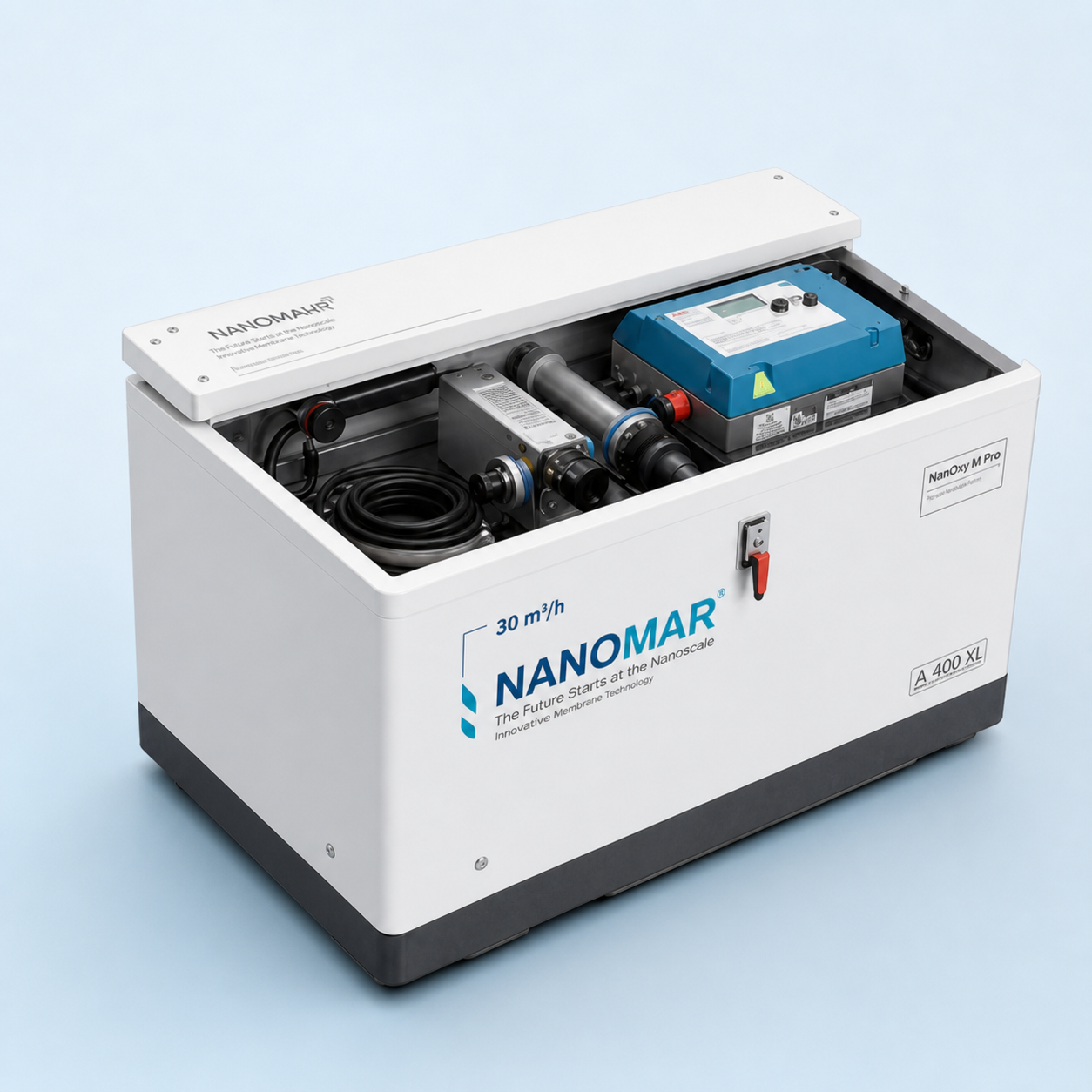
Sizing follows the oxygen demand rather than the surface area. NanoMAR models run from the 2–50 lpm NanOxy S2 for trials to the 0.3–1 000 m³/h NanOxy S1 platform; a pilot-scale NanOxy M Pro at 10–100 m³/h is often the right size for a storage duty.

Send us a depth profile

Dissolved oxygen and temperature at depth, the size of the water body, and what it is being used for. That is enough to say whether this is the right intervention.

Talk to an engineer

Ready to rethink your water?

Tell us about your process and we'll size a nanobubble system for it.

Talk to our team