All industries

Industries

Food Industry

Hygienic process water and effluent management.

Food and beverage producers use nanobubble systems to carry oxygen or ozone through process water without dosing a chemical. A nanobubble is a gas cavity under 200 nm, effectively neutrally buoyant, so it stays in the water for days to weeks and reaches surfaces a rising bubble never touches. NanoMAR publishes 80 %+ suspended-matter removal, 50 %+ turbidity reduction and 40 %+ higher oxygen transfer, with no residue to rinse out.

Food Industry

Food and beverage producers need consistently clean process water and reliable effluent handling. Nanobubbles carry oxygen or ozone through that water without dosing a chemical: gas cavities under 200 nm stay suspended for days and reach contact surfaces a rising bubble never touches, leaving no residue to rinse out.

They act on the biofilm that establishes on equipment, and on the organic load reaching the drain before discharge — 80 %+ suspended-matter removal in NanoMAR's published figures.

What does poor process water cost?

The bill never arrives as a water bill. A swab fails and a line is held. Cleaning chemistry goes up to compensate, rinse-out lengthens, and the organic load reaching the drain carries the trade-effluent charge with it.

Hygienic process water

A nanobubble is a gas-filled cavity under 200 nm. Buoyancy loses to drag at that size, so it does not rise and burst: it stays suspended for days to weeks and reaches the dead leg and the shadow behind a fitting.

The gas interface is enormous, so transfer approaches completion — oxygen for aerobic duties, ozone for disinfection, both standard applications of the platform. A strong negative zeta potential lifts fine solids off surfaces: 80 %+ suspended-matter removal, 50 %+ turbidity reduction.

What figures does NanoMAR publish?

80 %+
Suspended-matter removal
Solids lifted by charge
50 %+
Turbidity reduction
On the treated stream
40 %+
Higher oxygen transfer
Against conventional bubbles
Zero
Chemicals dosed
No coagulant, no residue

Biofilm in pipes and tanks

Biofilm is why a circuit that passed last week fails this week.

Where it sits

Dead legs, valve bodies, tank walls above the working level, filler nozzles, plate packs.

What nanobubbles do

Ozone or oxygen reaches those places instead of venting at the surface, and acts on the organic matter there.

What changes

Cleaning frequency stops being set by the worst point in the circuit.

CIP cleaning

Nanobubbles do not replace a CIP set; they change the water each step is made with.

  1. 01

    Pre-rinse

    Charged bubbles hold loosened soil in suspension instead of letting it redeposit.

  2. 02

    Caustic and acid

    Unchanged. We would not cut a validated recipe on a supplier claim.

  3. 03

    Final rinse

    Where nanobubble water earns its place: ozone into the circuit, nothing dosed left behind.

  4. 04

    Rinse recovery

    Final-rinse water is often good enough to reuse as pre-rinse.

Food industry effluent

Food effluent has a signature: swinging organic strength, fats and grease, sugar or starch in solution, batch discharges when a vessel empties. Equipment sized on the daily average fails in the hour that matters.

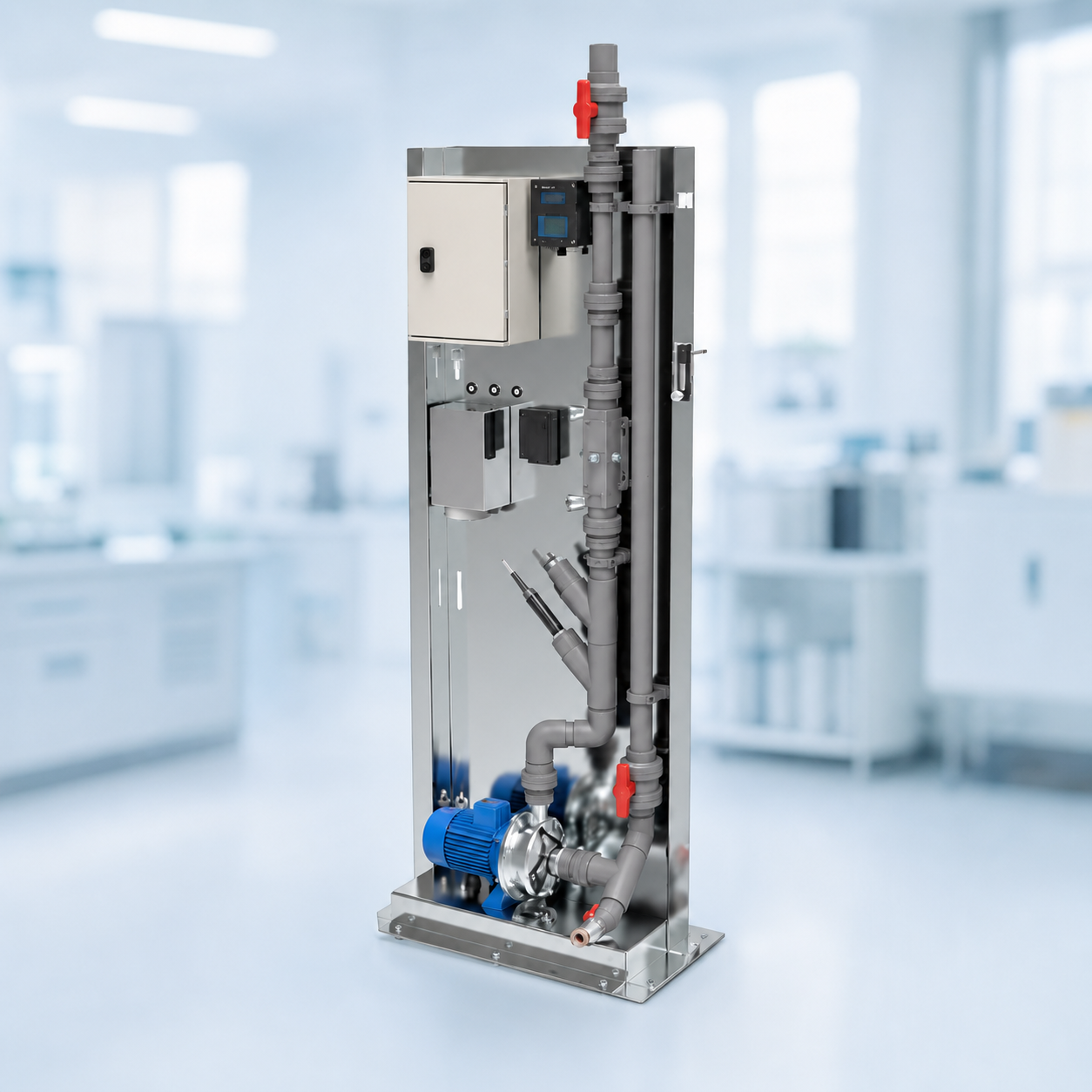
The unit goes on the balance tank and the flotation stage, on a side stream that can be valved out during production. Charge-driven flotation takes out the fine and colloidal fraction a coagulant would be dosed to catch. Held oxygen keeps the tank aerobic overnight instead of septic. Nothing is dosed, so no chemical mass joins the cake. The NanVANN Pro covers the duty, 5–500 m³/h.

Which NanoMAR unit fits a food plant?

Trial the loop you trust least, then size on what it measured.

ModelFlowWhere it fits
NanOxy S22–50 lpmPortable unit: trials on one loop
NanOxy M Pro10–100 m³/h (nominal 35–55)Pilot platform: validation and scale-up
NanOxy S10.3–1 000 m³/hBench work to full process-water duty
NanVANN Pro5–500 m³/hEffluent duty: TSS and TOC reduction, TAN management

The S1 membrane module needs no electrical connection, which suits a wet washdown zone.

What should you measure to prove it worked?

Agree the set before the unit arrives, on the same instruments.

  • Turbidity and suspended solids. Same sample point before and after: whether 80 %+ and 50 %+ hold on your water.
  • Dissolved oxygen profile. The spread across the tank or loop, not one probe.
  • Surface hygiene. Swab the surfaces you already care about, on the existing method.
  • Chemistry and load per cycle. Detergent, acid and biocide per line; organic load and solids at the gate.

When is a nanobubble system the wrong tool here?

  • A dissolved contaminant. Sugar in solution is not lifted by a bubble; that is a biological or oxidation duty.
  • An approval you need in writing. Ozone in water contacting food is governed market by market; the approval is the producer’s to hold, and NanoMAR publishes none.
  • A design fault. A dead leg or a badly falling drain is not a water-treatment problem.

No publishable references exist yet and we will not invent one; our pilot and verification method sets out how a trial runs. Each nanobubble system from NanoMAR is quoted against a duty.

The first question we ask a food producer is not the flow rate. It is which loop they trust least, and what they already measure on it.
Behnood Sjåstad Fathi Co-founder & CTO, NanoMAR AS

FAQ

What is nanobubble food processing water treatment?

NanoMAR generates gas cavities under 200 nm at a membrane, venturi or ceramic stage. They stay suspended for days to weeks and carry oxygen, air or ozone through process water, dosing nothing.

Can nanobubbles help with biofilm removal in a food plant?

Biofilm establishes where flow is slow and a rising bubble never reaches. NanoMAR nanobubbles travel with the water rather than out of it, so ozone or oxygen gets there. They support a cleaning programme, not replace it.

Do nanobubbles replace CIP cleaning chemicals?

No. NanoMAR would not recommend cutting a validated CIP recipe on a supplier claim. Nanobubble water improves the pre-rinse, by holding soil in suspension, and the final rinse, by carrying ozone.

What does a nanobubble system do for food industry effluent?

NanoMAR nanobubbles carry a negative charge that attaches to fine solids, fats and grease, so they float out rather than being coagulated out: 80 %+ suspended-matter removal, 50 %+ turbidity reduction.

Which NanoMAR unit should a food producer start with?

NanoMAR would start on one loop: the portable NanOxy S2 runs at 2–50 lpm. The NanOxy M Pro covers 10–100 m³/h for pilot work, and effluent runs on the NanVANN Pro.

Send us the loop you are least happy with

Flow, temperature range, what you dose today and what you already measure. Our engineers in Bergen will say plainly whether nanobubbles change anything on it.

Start the conversation

Ready to rethink your water?

Tell us about your process and we'll size a nanobubble system for it.

Talk to our team