
Scalable membrane generator
NanOxy S1
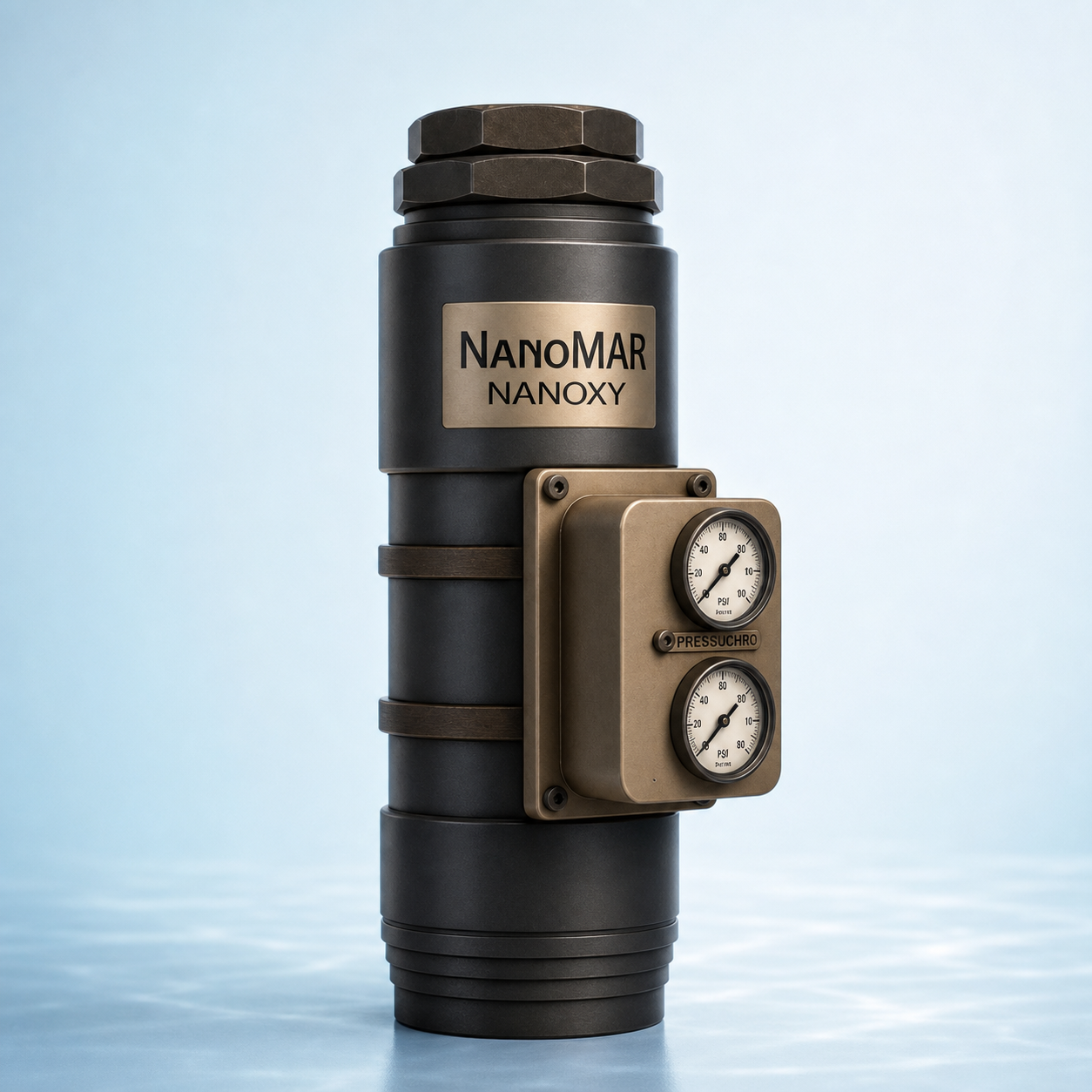
A unified membrane nanobubble platform that scales from laboratory research to full industrial installations. Compressed gas required; no electrical connection at the membrane module.
0.3–1 000 m³/h
At a glance
- High precision
- Low pressure
- Membrane based
- Industrial scale
Capacity and performance
The S1 covers 0.3 to 1,000 m³/h by membrane area rather than a different method: a bigger unit is more of the same modules in parallel, so a bench result describes the plant build.
Flow alone sizes nothing. Duty is flow paired with the concentration you must hold; gas demand is the product of the two. The NanOxy Pro figures show the trade: 18.9 m³/h at 40 mg/L against 75.6 m³/h at 10 mg/L. Four times the water at a quarter of the concentration, one machine. Push an S1 to a high concentration and the flow it holds drops in proportion, so bring a duty point rather than a tank volume.
Which figures are published?
Platform figures NanoMAR publishes; the S1 is the membrane configuration. No energy percentage exists, so none is quoted.
Technical specifications
The right-hand column is what belongs in a comparison.
| Parameter | NanOxy S1 | What it decides |
|---|---|---|
| Flow range | 0.3–1,000 m³/h | Scale-up is a module count, not a new machine |
| Bubble size | Under 200 nm | Below this, bubbles stop rising; gas transfers for days |
| Separation stage | Membrane | Repeatable size distribution; wants clean water |
| Gas supply | Compressed gas required | Cylinders, generator or contract; often outweighs the unit |
| Membrane module | No electrical connection | Goes where power is awkward; nothing electrical to fail |
| Chemicals | None required | Nothing dosed, no residue downstream |
Gas options: O2, air, ozone
The membrane is indifferent to the gas; your process is not. The choice moves running cost more than the machine.
Oxygen
Wherever biology is the load. Highest dissolved concentration achievable, and the only option at high stocking density.
Air
Nothing to buy or store beyond compression. Lower ceiling, but enough for irrigation and ponds.
Ozone
Disinfection, not oxygenation. Puts the oxidant into the water column, not the headspace, and leaves no residue.
Typical applications
Same physics across 9+ industries; the gas and the placement change.
| Duty | What the S1 does | Gas |
|---|---|---|
| Oxygenation and aeration | Holds a set point, and keeps working downstream | Oxygen or air |
| Disinfection and pathogen control | Oxidant goes where the organisms are | Ozone |
| Algae and biofilm control | Discourages film on pipework and membranes | Ozone or oxygen |
| Flotation and separation | Charge attaches fine solids and oil, then floats them | Air |
| Irrigation and root health | Raises oxygen at the root zone | Oxygen or air |
Installation and integration
Most of the engineering sits upstream of the module.
-
01
Sort the gas first
Cylinders, on-site oxygen or plain air decide footprint, utilities and running cost more than the generator does.
-
02
Side stream or in-line
A side stream can be valved out and serviced while the process runs. In-line responds faster but sits in the critical path.
-
03
Protect the membrane
Set the cleaning interval against your dirty case, not the design case.
-
04
Instrument, then baseline
Log dissolved oxygen or ozone residual where the effect is wanted. A fortnight of data beforehand makes the gain defensible.
Energy use
Compare generators on energy per kilogram of gas transferred, not on motor rating: a machine that draws less power while venting half its gas costs more to own.
The S1 membrane module takes no electrical connection, so the load sits in the pump and in any on-site gas plant. Because bubbles under 200 nm stay suspended, transfer approaches completion: NanoMAR publishes 40 %+ higher oxygen transfer, which is gas you do not buy twice. Ask for that figure at your conditions, not from a clean-water test — ask a European nanobubble supplier directly, or read how we quote.
Download datasheet
One sheet cannot describe a platform this wide. Send these four; NanoMAR issues the datasheet for the matching configuration.
- Flow and target concentration. Sets the module count. Worst case, not average.
- Gas on site. Oxygen, compressed air, or nothing yet.
- What the water does today. Temperature, salinity, solids, existing treatment.
- Where the unit sits. Side stream or in-line, retrofit or new build.
Frequently asked questions
- What flow rate does the NanOxy S1 cover?
NanoMAR specifies the NanOxy S1 from 0.3 to 1,000 m³/h. Capacity comes from adding membrane modules, not from changing method, so a bench result holds at industrial scale.
- Does the NanOxy S1 need an electrical connection?
No. The membrane module of the NanoMAR NanOxy S1 runs on compressed gas and the water passing through it. Electrical load belongs to the pump and any oxygen plant.
- Which gases can the NanOxy S1 run on?
Oxygen, air or ozone. NanoMAR uses oxygen where biology is the load, air for a modest lift, ozone for disinfection — always as bubbles under 200 nm.
- Does the NanOxy S1 add chemicals to the water?
No. The NanoMAR NanOxy S1 introduces only gas, so nothing is dosed and no by-products or residues are left downstream.
- How do I get a NanOxy S1 datasheet or quotation?
Send NanoMAR in Bergen your flow, the concentration you must hold and the gas available. NanoMAR quotes per installation, because duty changes the configuration.
Before you specify
Request a quote
Send a flow, a target concentration and what your water does today. Our engineers in Bergen will size the S1 against it.
Specifications
| Flow range | 0.3–1 000 m³/h |
| Bubble size | < 200 nm |
| Gas options | Oxygen · Air · Ozone |
| Separation stages | Membrane · Venturi · Ceramic |
| Operation | Continuous, automated |
| Chemicals | None required |
Ready to rethink your water?
Tell us about your process and we'll size a nanobubble system for it.
Talk to our team